

In a world where flexibility and convenience dominate consumer choices, temporary car insurance has become an essential solution for drivers with short-term needs. Unlike traditional policies that lock you into long contracts and monthly payments, temporary coverage offers day-to-day or week-by-week flexibility. It’s an ideal choice for anyone who needs to drive legally without the long-term financial commitment.
With the rise of car sharing, rentals, cross-country moves, and even borrowing a friend’s vehicle, the demand for temporary car insurance has surged in the United States. Whether you’re a student returning home for the summer, a tourist borrowing a relative’s car, or someone buying a vehicle and waiting for a long-term policy, temporary coverage fills the gap responsibly. It’s not just about legality—it’s about safety, savings, and peace of mind.
What Is Temporary Car Insurance and Who Really Needs It?
Temporary car insurance, often called short-term or one-day car insurance, is a policy that provides coverage for a limited period—typically ranging from 1 day to 30 days. Unlike standard 6- or 12-month policies, temporary insurance is designed for those who need protection for only a specific, short duration. It offers liability coverage, and in some cases, comprehensive and collision, just like traditional policies but without the long-term commitment.
This type of insurance is ideal for a variety of drivers. Students home from college for a few weeks may not need a full policy but still require legal coverage. Tourists driving a borrowed vehicle, people test-driving a car for a few days, or even someone using a friend’s truck to move houses—all these scenarios are perfect fits for temporary coverage. Additionally, it works well for vehicle owners who want to avoid a lapse in coverage when switching providers or waiting on documentation.
Another demographic that benefits are business travelers or gig economy workers using personal or rented vehicles temporarily. With liability and even optional collision/comprehensive protection, temporary insurance gives these drivers the assurance they need during transitional periods. It’s also commonly used by military personnel or those taking a road trip in a borrowed or rental car.
Importantly, temporary car insurance is not available from every insurance company in the U.S., and coverage terms can vary by state. Some insurers offer it through third-party partnerships, while others require more traditional policies. However, when it’s available, it’s a highly effective and affordable solution for legal driving over a short span.
Why Temporary Car Insurance Can Save You Big Time?
- No long-term contract: Pay only for the days or weeks you need, not months you don’t.
- Avoids coverage gaps: Bridges gaps between policies or while waiting for permanent insurance.
- Ideal for students and tourists: No need to pay for full coverage when only driving occasionally.
- Reduces risk of legal trouble: Even one day of driving without insurance can lead to fines or license suspension.
- Cheaper than rental company insurance: Often less expensive than add-ons offered by rental agencies.
How to Choose the Right Short-Term Car Insurance in the USA?
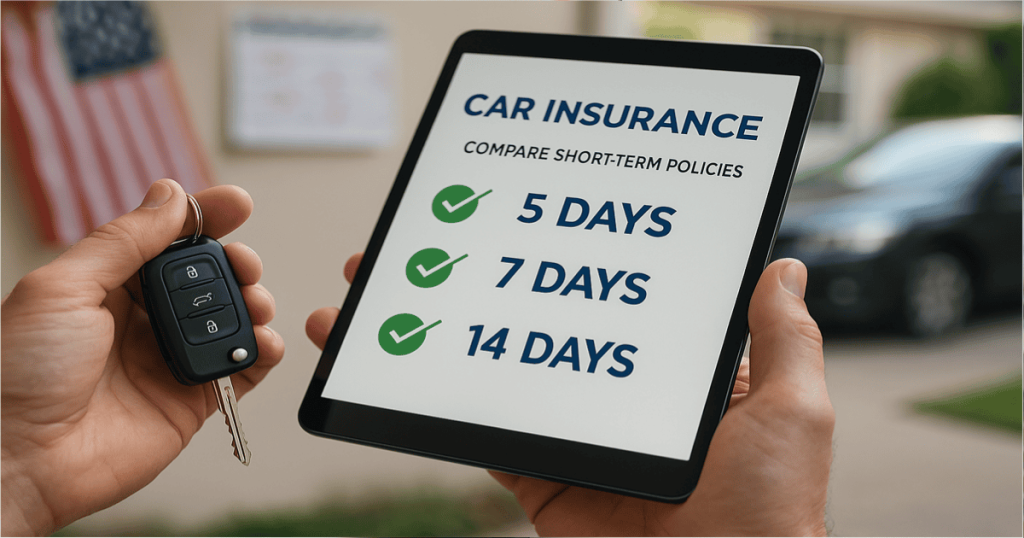
- Know your needs: Determine how many days of coverage you require and what level of protection.
- Compare policies: Use online quote tools to compare rates from trusted insurers.
- Check state laws: Not all states allow short-term policies. Always verify availability.
- Read the fine print: Ensure the policy includes the coverage types you need (liability, collision, etc.).
- Consider usage: Some policies restrict usage types (e.g., commercial vs. personal).
Top Benefits of Getting Temporary Auto Coverage
- Legal protection during short-term driving.
- Flexibility for travelers and temporary vehicle use.
- Cost-effective for people not driving year-round.
- Simple application and approval process.
- Peace of mind for drivers borrowing or lending a vehicle.
When and Why You Might Need Car Insurance for a Day, Week, or Month
- Test-driving a new or used vehicle.
- Visiting family and using their car for a few days.
- Renting a moving truck or van.
- Temporary business travel using a rental car.
- Student drivers home for summer vacation.
- Borrowing a car while yours is under repair.
Who Offers Legit Temporary Car Insurance in the USA?
- GEICO – Offers short-term coverage through modifications.
- Progressive – Doesn’t directly offer it, but flexible cancellation makes it an option.
- Root Insurance – App-based policies with customizable terms.
- Allstate – Short-term solutions for rental and borrowed vehicles.
- Travelers – Ideal for temporary use in some states.
- Specialty Insurers – Like Hugo or Bonzah for true day-to-day insurance.
Steps to Apply for Short-Term Car Insurance Online
- Choose a provider: Start with trusted insurers or aggregators like The Zebra, Insurify, or Gabi.
- Get a quote: Enter your location, vehicle info, and driving history.
- Select coverage duration and type: Most platforms allow you to customize term length and limits.
- Upload documents: Driver’s license, vehicle registration, and possibly proof of residency.
- Pay and confirm: Use a credit/debit card to activate coverage immediately.
What You’ll Need to Get Approved for Temporary Coverage
- Valid U.S. driver’s license
- Proof of vehicle ownership or usage permission
- Vehicle details (VIN, plate number, model)
- Clean driving history (may impact eligibility or rates)
- Payment method (credit card or bank)
How Much Does Temporary Car Insurance Cost in the USA?
Temporary car insurance rates vary based on location, age, driving history, and coverage type. On average:
- 1-day coverage: $10–$25
- 1-week coverage: $40–$75
- 1-month coverage: $90–$250
These rates are significantly cheaper than committing to a 6-month policy if you don’t drive regularly. High-risk drivers or luxury vehicles may see higher prices. Always compare quotes for the most accurate estimate.
Temporary vs Full Coverage: Which One Should You Pick?
Temporary insurance is best for short-term drivers—people who only need coverage for specific dates. It’s cheaper and more flexible but lacks the consistency and benefits of a full policy. Full coverage includes long-term benefits, loyalty perks, accident forgiveness, and bundled discounts, but comes with higher upfront costs.
If you plan to drive year-round or need add-ons like roadside assistance, a full policy makes more sense. But for road trips, temporary relocations, or occasional driving—temporary car insurance wins on convenience and cost.
Is Temporary Insurance Legal in All 50 States?
Not all U.S. states support true temporary policies. Some require a minimum coverage term or only allow traditional policies. However, drivers in most states can legally get short-term insurance through:
- Cancelable standard policies
- App-based pay-per-day coverage
- Add-ons to rental or borrowed car agreements
It’s crucial to check state-specific DMV and insurance laws before driving. Some states, like New York and Hawaii, may have stricter guidelines.
5 Common Myths About Short-Term Auto Insurance
- “It’s only for young or risky drivers” – False. Anyone needing temporary coverage can apply.
- “It’s illegal or a loophole” – Not true. It’s a recognized form of coverage in most states.
- “Rental company insurance is better” – Often more expensive with less flexibility.
- “It doesn’t cover accidents” – Most policies include standard liability and optional add-ons.
- “You don’t need it if borrowing a car” – Risky assumption. The owner’s policy may not cover non-household drivers.
Tips to Make the Most of Your Short-Term Car Policy
- Compare multiple providers before choosing a plan.
- Bundle days instead of buying day-by-day to save more.
- Always read exclusions to avoid denied claims.
- Set alerts for expiration to avoid unintentional driving without coverage.
- Keep digital proof of insurance for easy roadside access.
Tools to Compare Temporary Car Insurance Rates Fast
- The Zebra – Compares top insurers in seconds.
- Insurify – Great for side-by-side quote comparisons.
- Gabi – Helps with bundling and switching.
- Jerry App – Simplifies short-term policy selection.
- Hugo – Pay-as-you-go insurance with flexible terms.
Planning Ahead: When Temporary Coverage Is a Smart Move
Planning a cross-country road trip? Letting a friend borrow your car while you’re away? Temporary car insurance is a strategic tool when you anticipate gaps or short-term needs. It’s also wise to consider it before:
- Moving across states
- Test-driving high-value vehicles
- Sharing your car with someone outside your household
Being proactive avoids surprise legal or financial trouble—and ensures you’re always covered.
FAQs
Can I get car insurance just for one day in the USA?
Yes, select insurers and apps offer 24-hour policies. They’re ideal for test drives, road trips, or emergencies.
Is temporary car insurance cheaper than regular insurance?
Generally, yes—especially for short durations. However, daily rates may exceed long-term if used too often.
Do I need temporary insurance to borrow someone else’s car?
Do I need temporary insurance to borrow someone else’s car?
Can I insure a rental car temporarily without the rental company’s policy?
Yes, via third-party insurers or some credit card benefits. Always confirm coverage terms before declining rental add-ons.
What documents are needed for temporary car insurance?
Typically a driver’s license, vehicle info (VIN), and payment details. Some providers may request more.
Who should avoid temporary auto coverage?
Drivers needing consistent coverage, those with financed vehicles, or people requiring specialized add-ons like gap insurance.
Final Note: Temporary car insurance isn’t just a budget hack—it’s a flexible, legal, and smart coverage option for millions of Americans. Whether you’re driving for a day or a few weeks, make sure your policy fits your journey.