

Insurance shopping has become easier than ever with the rise of digital platforms. Gone are the days of visiting multiple agencies and getting overwhelmed with complicated policies. Now, you can shop for insurance online and compare rates, coverage, and terms all in one place. Whether you’re looking for auto, home, health, or life insurance, the internet provides an accessible way to find the best deals tailored to your specific needs.
Shopping for insurance online can save you time and energy while providing you with the most competitive prices. The simplicity of using an online insurance marketplace means you can browse through various policies, compare them, and select the one that best suits your financial situation and coverage requirements. You also gain access to unbiased reviews and expert opinions that can guide your decision-making process, helping you make an informed choice without unnecessary pressure.
Tips to Help You Choose Your Insurance
Choosing the right insurance policy can be a daunting task, but with the right information, it can be easier than you think. Here are some tips that will help you choose the best insurance for your needs:
- Understand Your Coverage Needs
Before you even start shopping, it’s important to understand what you need. Are you looking for basic coverage or something more comprehensive? Do you need add-ons like roadside assistance for your car insurance or flood protection for your home insurance? Being clear about what you need will help you narrow down your options and avoid wasting time on policies that don’t fit your requirements. - Check the Insurer’s Reputation
Insurance isn’t just about price; it’s about trust and reliability. Choose an insurance company with a solid reputation for customer service, claims processing, and financial stability. Research online reviews, customer satisfaction ratings, and third-party reviews like J.D. Power to ensure you’re selecting a reputable insurer. - Compare Multiple Providers
Don’t settle for the first offer you receive. Insurance premiums can vary significantly between providers for the same coverage. Use comparison tools to shop around and find the best options available. Many websites allow you to enter your details once and receive quotes from multiple insurance companies, saving you time and effort in the process. - Consider the Policy Terms
Insurance policies often have complex terms and conditions. Always read the fine print before purchasing. Understand what’s covered and, more importantly, what isn’t. Some policies may have exclusions or limitations that could leave you underinsured in certain situations. Pay close attention to the policy’s deductibles, exclusions, and maximum payout limits.
Things to Consider Before Choosing Plans
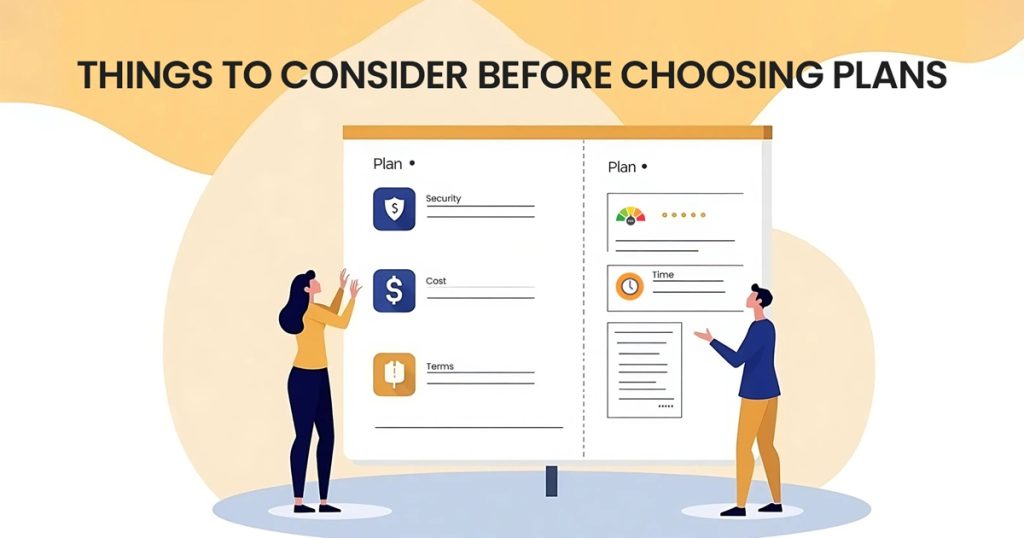
When choosing an insurance plan, there are a few factors that you should always take into account:
- Premiums and Deductibles
Premiums are the amount you pay for your insurance coverage, while deductibles are what you pay out-of-pocket before your insurance kicks in. It’s essential to balance your premium with your deductible. A lower premium might seem appealing, but it could come with a higher deductible, which means higher out-of-pocket costs if you need to file a claim. - Policy Coverage
Always ensure that the insurance plan you choose provides enough coverage for your needs. For example, with auto insurance, you’ll want to ensure that it covers liability, collision, and comprehensive damage. Health insurance should cover major medical expenses, emergency services, and prescription drugs. Not all insurance plans are equal, so make sure the coverage fits your specific circumstances. - Limitations and Exclusions
Each insurance policy has certain limits and exclusions, which is why it’s crucial to read the fine print. You don’t want to find yourself in a situation where your policy doesn’t cover certain situations, like a natural disaster or a pre-existing health condition. Understanding these exclusions will help you choose a plan that gives you peace of mind. - Customer Service and Claims Process
Even the best insurance policies won’t help you much if the insurer’s customer service is difficult to reach or unresponsive when you need assistance. Research the claims process to see how easy it is to file a claim. Are claims handled quickly and fairly? Look for insurers that offer 24/7 customer support and easy-to-navigate online claims submission.
How Shop for Insurance Operates
Shopping for insurance has evolved with technology, making it simpler for individuals to find the best plans for their needs. Here’s how the process works:
- Fill Out a Questionnaire
Most online insurance shopping platforms start by asking you to fill out a questionnaire. This will include questions like your age, the type of coverage you need, your location, and your insurance history. These questions help the platform match you with policies that suit your personal situation. - Compare Policies and Prices
After you’ve provided the necessary information, you’ll be shown a list of insurance policies from various providers. These results will show the premiums, coverage options, and benefits side by side, allowing you to compare them easily. Many platforms also display customer ratings, helping you choose an insurer based on reliability and user feedback. - Select Your Policy
Once you’ve compared your options, it’s time to select the policy that best fits your needs. Pay attention to the total cost, coverage limits, exclusions, and customer service ratings before making a final decision. Some platforms allow you to purchase the policy directly, while others might direct you to the insurance company’s website for final registration. - Review the Terms and Finalize
After selecting a policy, always take time to review the terms and conditions thoroughly. Ensure the policy covers everything you need and that the premiums and deductibles are manageable. Once you’re satisfied with the plan, you can finalize your purchase and begin enjoying the protection your insurance provides.
Getting the Best Price for You
To get the best price on insurance, consider the following tips:
- Bundle Policies
Many insurance companies offer discounts when you bundle multiple policies together. For example, you can bundle your auto and home insurance with the same provider to receive a discount. Bundling is an effective way to lower your overall insurance costs while keeping all your coverage under one roof. - Shop Around and Compare
It’s crucial to shop around and compare prices before making a decision. Don’t assume that the first quote you get is the best. Use comparison websites to check several insurance providers and make sure you’re getting the most competitive price for the coverage you need. - Maintain a Good Credit Score
In many states, your credit score can influence your insurance premiums. Insurers often offer lower rates to individuals with good credit. Ensure that your credit score is in good shape by paying bills on time, reducing debt, and monitoring your credit report regularly. - Choose Higher Deductibles
If you’re looking for a lower premium, one way to achieve this is by choosing a higher deductible. While this means you’ll pay more out-of-pocket in the event of a claim, it can significantly lower your monthly premium payments.
Combine Insurance Plans to Save More
- Multi-Policy Discount
Insurance providers offer multi-policy discounts for customers who purchase more than one type of insurance. For example, bundling your car, home, and life insurance with the same provider can result in savings of 10% to 25% on premiums. - Consider Adding Family Members
If you have a family, consider adding family members to your policies. Many insurers offer discounts for insuring multiple individuals within the same household. - Group Insurance Plans
Some employers or professional organizations offer group insurance plans to their employees or members. These group plans can often provide lower rates due to the larger pool of individuals being covered.
How Can Your Premium Be Affected by Your Location?
Your location plays a significant role in determining your insurance premiums. Here’s how:
- Higher Risk Areas: Living in areas prone to natural disasters (like hurricanes or floods) or high crime rates may result in higher premiums, as these areas are considered higher risk.
- State Regulations: Insurance rates vary by state due to differences in regulations, insurance laws, and market competition.
- Local Weather and Traffic: In cities with more traffic congestion or extreme weather conditions, auto insurance premiums may be higher due to the increased likelihood of accidents.
Be Conscious of Insurance Policy Fine Print
Insurance policies come with specific terms and conditions that could affect your coverage. Always be aware of:
- Exclusions: These are situations or events that are not covered by your insurance. For instance, certain natural disasters may be excluded in a homeowner’s policy.
- Premium Increases: Some insurers may increase your premiums after a claim, especially if you’ve filed multiple claims in a short period.
- Claims Process: Understand the claims process to ensure that it’s easy to file a claim when you need to.
Reliable Narratives from Smart Shoppers
Many smart insurance shoppers have shared their positive experiences with online shopping platforms. The ease of comparing various options, reading customer reviews, and making informed decisions based on clear, transparent information has made insurance shopping a seamless experience.
Prioritize Your Budget
When shopping for insurance, always consider your budget. While it might be tempting to opt for cheaper plans, you should balance affordability with adequate coverage. Make sure the policy provides enough protection without breaking your budget.
Do Not Miss Out on the Discount
Many insurance providers offer discounts for various reasons, such as having a clean driving record, installing security systems, or even being a loyal customer. Always inquire about available discounts before finalizing your purchase.
Advice on Insurance
When in doubt, seek professional advice. Speak to an insurance agent or use online resources to learn more about the coverage options available to you.
Trusted by Millions
Online insurance shopping platforms have become trusted by millions of people worldwide for their convenience, transparency, and competitive pricing.
Do You Need Assistance? Speak with an Actual Agent
If you have questions or need more guidance, don’t hesitate to speak with an actual agent. Insurance agents are there to help you navigate the complex world of insurance and find the best plan for your needs.
FAQ
What Does the “Shop for Insurance” Stand For?
“Shop for insurance” refers to the process of comparing and purchasing insurance policies from various providers, either through an online platform or by contacting insurance agents directly.
What Makes Online Insurance Shopping Wise?
Online insurance shopping allows consumers to easily compare prices, coverage options, and customer reviews, helping them make informed decisions and secure the best possible deal.
How Can I Find the Least Expensive Insurance That Offers Good Coverage?
To find affordable insurance with good coverage, compare quotes from multiple providers, look for discounts, and consider bundling policies to save money while ensuring comprehensive coverage.