

In today’s digitally driven landscape, IT contractors play a pivotal role in supporting companies with critical infrastructure, software, and cybersecurity solutions. However, this independence comes with responsibility—and significant risk. A single error in code, breach of data, or misconfigured server could trigger lawsuits, financial loss, or reputational harm. That’s why IT contractor insurance isn’t just smart—it’s essential.
Whether you’re an app developer, systems analyst, DevOps engineer, or freelance cybersecurity expert, having robust insurance coverage gives your clients peace of mind and protects your livelihood. This guide will walk you through everything you need to know about choosing the right coverage tailored to your specific tech role.
A Full Overview of IT Contractors Insurance
Understanding what insurance policies are available to IT contractors can help protect your career from unexpected challenges:
- What It Means and Why It Matters
- IT contractor insurance is a customizable package that shields independent tech professionals from liabilities such as data breaches, client lawsuits, and property damage.
- It acts as a safeguard against claims stemming from professional errors or service disruptions.
- IT contractor insurance is a customizable package that shields independent tech professionals from liabilities such as data breaches, client lawsuits, and property damage.
- Essential Areas of Protection
- Covers legal fees, third-party damages, business interruptions, cyber incidents, and even stolen hardware.
- Important for contractors offering services in programming, networking, support, or consultation.
- Covers legal fees, third-party damages, business interruptions, cyber incidents, and even stolen hardware.
- Tailored for Flexibility
- Policies can include professional indemnity, general liability, cyber liability, and more.
- You can scale your coverage based on contract size, project type, or client demand.
- Policies can include professional indemnity, general liability, cyber liability, and more.
- A Competitive Advantage
- Clients—especially government or enterprise—often require proof of insurance before starting work.
- Having coverage positions you as a trustworthy and risk-aware professional.
- Clients—especially government or enterprise—often require proof of insurance before starting work.
Why Does IT Contractor Need Insurance?
| Reason | Explanation |
| Professional Mistakes | Code errors or missed deadlines can lead to legal claims. |
| Contract Requirements | Clients may demand specific policies before hiring. |
| Business Continuity | Shields income from lawsuit-related interruptions or damages. |
| Enhanced Credibility | Builds trust with new clients or agencies. |
| Regulatory Compliance | Required for certain regulated industries or government work. |
Insurance Types That All IT Contractors Need to Know
| Insurance Type | What It Covers |
| Professional Indemnity | Legal costs from client disputes, errors, or omissions in services. |
| General Liability | Third-party injuries or property damage at your workplace or on-site. |
| Cyber Liability | Data recovery, breach notification, and legal expenses after cyber events. |
| Business Owner’s Policy | Combines property and general liability—ideal for office-based workers. |
| Tools & Equipment Coverage | Damage or theft of tech gear like laptops and routers. |
| Workers’ Compensation | Covers employee injuries if you hire others under your business. |
What Are the Best Insurance Options for IT Work?
| Plan Type | Best For | Highlights |
| Tech E&O (Errors & Omissions) | Freelancers & consultants | Defends against client claims of unsatisfactory service. |
| Cyber Risk Insurance | Data security professionals | Covers data breaches, ransomware, and breach costs. |
| Liability Package Combo | Remote or hybrid workers | Affordable, full-spectrum protection for small contractors. |
| Team Plans | Agencies or partnerships | Covers multiple individuals under one group policy. |
| Short-Term Project Cover | Contract or gig workers | Flexible coverage for limited-time engagements. |
IT Contractors Frequently Face These Risks
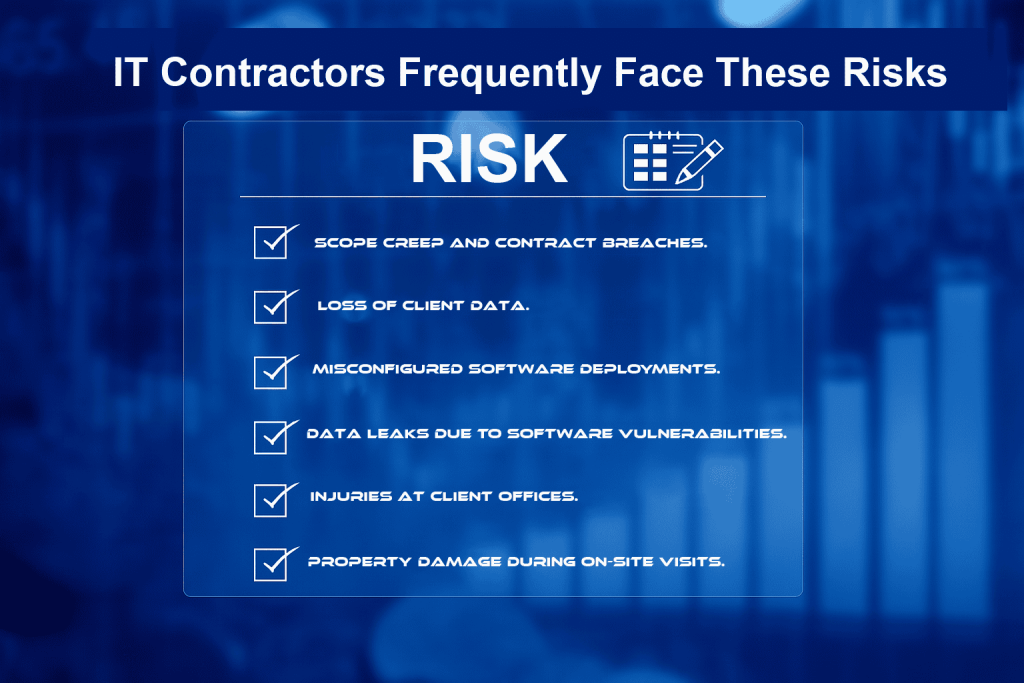
- Data Security Breaches – Loss of sensitive client data from attacks or mishandling.
- Downtime Failures – Outages from bugs or failed updates causing business loss.
- Site Accidents – On-site mishaps when setting up hardware or networks.
- Litigation – Being sued for delays, poor performance, or breach of terms.
- Device Theft or Loss – Stolen tech gear disrupting contract obligations.
- Coding Vulnerabilities – Flawed code leading to compromised systems.
What Is Covered by an IT Contractor Policy?
- Claims for negligence or performance errors
- Defense and court costs
- Equipment replacement (if insured)
- Compensation for data loss recovery
- Third-party injury or damage claims
- Reimbursement for business interruption
- PR crisis management (for breaches or media exposure)
Who Needs IT Contractor Insurance the Badly?
- Freelancers Working Without Legal Teams
- Cloud Architects Managing Critical Infrastructure
- Web Developers Handling Payment Integrations
- DevOps Specialists Automating Deployments
- IT Auditors or Consultants Overseeing Compliance
- Contract IT Staff Entering Client Offices
Public Liability Against Professional Indemnity
Public Liability Insurance:
- Covers injury or property damage claims from third parties (e.g., if a client slips on your office floor).
Professional Indemnity Insurance:
- Covers financial loss from professional mistakes like misconfiguration or incorrect recommendations.
Having both ensures complete protection, especially in client-facing or consulting roles.
Coverage for Data Breaches and Cyber Incidents
- Cyber Insurance is critical for IT roles involving servers, codebases, or sensitive data.
- Covers:
- Breach investigation
- Customer notification costs
- Legal and regulatory fines
- Reputation management
- Breach investigation
Some insurers also offer:
- Ransomware negotiation support
- Credit monitoring services for affected users
Limited Company Coverage Needs vs. Freelancers
| Role Type | Insurance Needed | Why It’s Important |
| Limited Companies | Employer liability, office coverage | To protect employees, rented spaces, and shared risks. |
| Freelancers | E&O, general liability, cyber protection | Tailored for independent work without office premises. |
Documents That Insurers Usually Ask For
- Business registration documents (LLC/Corp/Sole Proprietor)
- Description of services offered
- Contract samples (to assess risk)
- Proof of previous insurance (if any)
- Annual income forecast
- Equipment inventory (for tools/equipment policies)
Limitations of IT Contractor Insurance Coverage
- May not cover international projects without an extension
- Fraud or deliberate misconduct is excluded
- Retroactive claims (before policy start) are often denied
- Coverage ceilings vary—exceeding them incurs personal risk
- Some policies don’t include subcontractor actions unless declared
Read Your Policy Terms Carefully
Before committing, always:
- Review all exclusions and clauses
- Verify coverage limits and deductibles
- Ask for clarity on ambiguous definitions
- Understand the renewal and claim processes
- Confirm how multiple project types affect coverage
FAQ
Is insurance mandatory for IT contractors?
Not by law—but most serious clients require it before signing deals or NDAs.
Is it possible to obtain short-term insurance for one-time projects?
Yes. You can purchase temporary project-abased coverage, often valid for 1–30 days.
How costly can IT contractor insurance be?
Average rates range from $350–$1,500/year depending on your specialty, revenue, and location. Cyber coverage may cost extra.
✅ Investing in the right IT contractor insurance protects your brand, future income, and legal standing. Whether you’re coding from a home office or managing data infrastructure for enterprise clients, the right policy transforms your work from risky to resilient.