
In the fast-evolving world of online retail, ecommerce businesses are increasingly exposed to unique risks that traditional brick-and-mortar stores might never face. From accidental customer injuries due to faulty products to copyright disputes over images used in digital ads, online stores are walking a legal tightrope every day. General liability insurance acts as a protective financial shield against such claims, ensuring your business doesn’t have to pay out-of-pocket for legal defense, settlements, or damages.
More importantly, consumers are becoming more litigious, and ecommerce platforms are tightening their requirements. Leading marketplaces like Amazon and Walmart.com now require proof of liability insurance once sellers hit certain revenue thresholds. So, whether you’re drop shipping or shipping your own inventory, investing in the right liability coverage is no longer optional — it’s a necessary business safeguard that satisfies platform rules, builds credibility, and protects your profit margins.
How General Liability Insurance Works for E-Retailers?
General liability insurance for ecommerce businesses is designed to cover the most common (and often most costly) legal threats an online store might face. It functions as a financial safety net, paying for third-party claims involving bodily injury, property damage, and even advertising-related offenses like slander, libel, or intellectual property violations.
For instance, if a customer claims they were harmed by a product sold through your site, this policy covers medical expenses, legal defense costs, and any court-awarded damages. Similarly, if you unknowingly use a copyrighted image in your product listing or marketing campaign, the insurer will handle legal representation and potential settlements. This type of coverage ensures that your business remains solvent and your reputation intact, even when legal troubles arise unexpectedly.
It’s important to understand that general liability coverage typically does not protect against cyberattacks, employee disputes, or product recalls — these require different insurance add-ons or separate policies. However, for the everyday claims most ecommerce businesses encounter, general liability is the foundational layer of protection.
Another key feature is scalability. Whether you’re a solo entrepreneur running an Etsy shop or a mid-size ecommerce brand generating six figures annually, general liability insurance can be customized to your business’s size, risk level, and industry niche. This flexibility makes it an ideal choice for both new startups and established sellers looking to reduce operational risk.
What Makes It Different from Other Ecommerce Insurance?
- Broader Legal Protection:
Unlike cyber insurance or product-specific plans, general liability insurance covers third-party claims for bodily harm, property damage, and advertising-related issues. - Applicable Across Platforms:
Whether you’re selling on Shopify, Amazon, or WooCommerce, general liability insurance is universally recognized and often required by ecommerce platforms. - Lower Premiums Compared to BOPs:
Business Owner Policies (BOPs) include liability plus property coverage, making them more expensive. General liability is more affordable if you just need basic protection.
The Core Protections Included in General Liability Coverage
- Bodily Injury Coverage
Protects your business if someone claims injury due to your product or service. - Property Damage Coverage
Covers damage caused to someone else’s property because of your operations or shipped products. - Advertising Injury Protection
Includes protection from libel, slander, copyright infringement, and misleading ad claims. - Legal Fees and Settlements
Pays for your legal defense, court costs, and settlements — often saving you tens of thousands.
Customer Injury, Copyright Claims & Delivery Damages
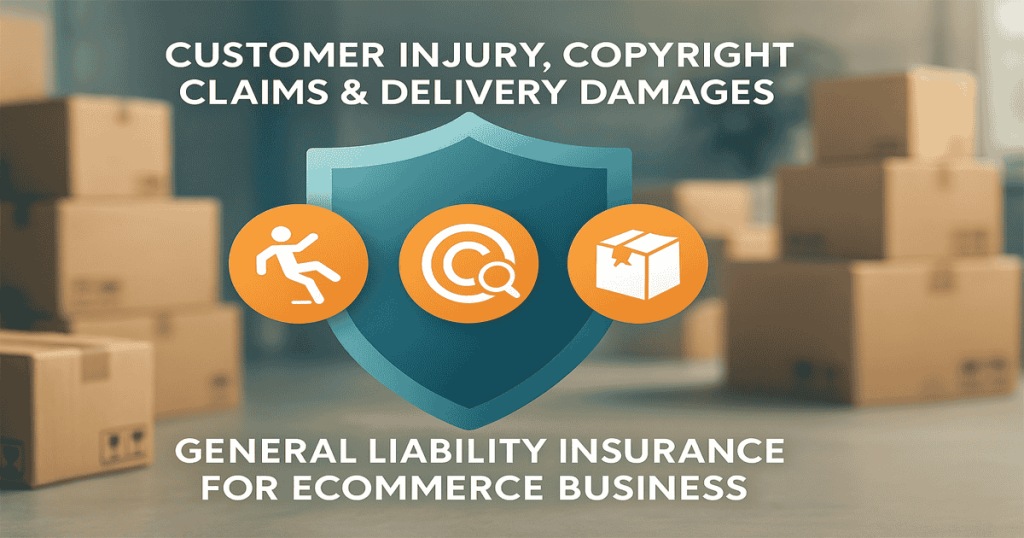
- Customer Injury from Faulty Products
A broken or mislabeled product causing harm to a user can lead to lawsuits. - Copyright or Trademark Claims
Using unlicensed images or similar branding may invite legal action from rights holders. - Delivery Damages or Lost Parcels
If a courier damages property or loses a shipment, customers may file claims — your insurer steps in.
Why Online Stores Are More Exposed Than You Think
- No Physical Barrier:
Anyone online can access your site and make a claim, even if it seems minor. - Third-Party Dependence:
Working with couriers, drop shippers, or platforms increases your legal vulnerability. - Multiple Sales Channels:
The more platforms you sell on, the more you’re exposed to different compliance standards and legal risk.
The Real Cost of Ignoring General Liability Protection
- Legal Defense Costs:
A single lawsuit can cost $15,000–$50,000 in legal fees alone. - Platform Suspensions:
Failing to carry insurance can lead to account bans from Amazon, Etsy, or Walmart. - Personal Asset Risk:
Without insurance, your personal assets may be at risk if you’re operating as a sole proprietor.
Product-Related Injuries and Claims Explained Simply
Even if you didn’t manufacture the product, you can still be sued if a customer is injured by an item sold on your ecommerce site. This is especially risky in niches like supplements, electronics, or baby products. General liability insurance provides a legal buffer, ensuring that your business can cover hospital bills, attorney fees, or product testing ordered by the court. Claims often arise unexpectedly — a small part breaking off or an allergic reaction can spiral into a six-figure lawsuit.
When Web Content or Ads Create Legal Trouble?
Most online sellers don’t realize that their blog posts, social media captions, or even product descriptions can lead to advertising injury claims. If your content is seen as defamatory, deceptive, or infringing on someone else’s trademark, you could face serious legal consequences. General liability coverage includes advertising injury protection — a vital feature in a digital-first world where one viral post can cause legal mayhem. Whether it’s a logo similarity or a bold product claim, your insurer helps you manage and resolve the fallout.
Shipping Accidents, Lost Goods & Third-Party Lawsuits
Shipping-related issues are one of the most frequent causes of customer disputes. From fragile items arriving broken to packages lost in transit, ecommerce sellers often find themselves stuck in the middle between courier services and unhappy buyers. Liability insurance steps in when these issues escalate into lawsuits. Some policies even cover property damage caused during delivery, such as when a courier damages a customer’s front door or landscaping. Third-party lawsuits are unpredictable, but insurance gives you peace of mind.
How to Compare Plans Based on Ecommerce Needs?
To find the best liability insurance for your ecommerce business, start by assessing your sales volume, product type, and platforms used. For example, if you sell internationally or deal in high-risk categories (like wellness or tech), look for policies with global coverage and product liability enhancements. Compare deductibles, policy limits, and exclusions closely — the cheapest plan may offer limited coverage. Read reviews, check insurer financial strength, and ask for custom quotes tailored to your specific business model.
Must-Have Add-Ons for High-Risk Online Retailers
- Product Liability Rider – Extends protection specifically for product-related injuries or damages.
- Cyber Liability Insurance – Covers data breaches, stolen customer data, and hacking-related claims.
- Business Interruption Insurance – Covers lost revenue due to downtime caused by covered perils.
- Inland Marine Coverage – Protects inventory in transit, especially useful for businesses with frequent shipping.
- Professional Liability (E&O) – If you offer consulting, digital products, or services, this protects against negligence claims.
What to Ask Insurance Agents Before You Sign Anything?
- Does this policy include advertising injury or just bodily/property damage?
- What is excluded from the policy that I might assume is covered?
- How are third-party delivery claims handled?
- Will the plan satisfy Amazon/Shopify/Walmart’s insurance requirements?
- Is there a waiting period before coverage becomes active?
- Are legal fees included or capped?
- Does it cover international claims?
How to Lower Premiums Without Losing Coverage?
There are smart ways to lower your insurance cost without compromising on essential protections. Consider raising your deductible — this lowers monthly premiums but still protects you from large, unexpected expenses. Maintain a clean claim history and demonstrate safety protocols (such as product testing and safe packaging). Ask about bundling policies, paying annually, or joining a business association that offers group discounts. Comparison shopping is also key; get at least three quotes before committing.
Best Time to Get Covered: Startup vs Growth Phase
Ideally, get liability insurance before launching your online store, especially if you plan to advertise heavily or sell physical goods. However, many sellers wait until they reach $10,000–$20,000 in revenue or until platforms require proof of insurance. The earlier you get covered, the better — even pre-launch coverage protects your test orders and promotional campaigns. Coverage during your growth phase ensures you’re not blindsided by legal trouble just as your revenue begins to climb.
Bundling Business Policies: What You Should Know
If you’re looking for comprehensive protection and better pricing, bundling policies can be a game changer. Many insurers offer Business Owner Policies (BOPs) that include general liability, property coverage, and business interruption insurance in one package. While slightly more expensive upfront, they often save money in the long run and simplify claims management. For ecommerce sellers using warehouses or operating physical offices, bundling can offer unmatched convenience and stronger peace of mind.
Frequently Asked Questions (FAQ)
Do I really need general liability insurance for drop shipping?
Yes. Even if you never see the product, you’re still legally responsible for what you sell under U.S. consumer protection laws.
How much does general liability insurance cost for ecommerce?
Expect to pay between $25 to $70 per month for basic coverage, with higher rates for high-risk product categories.
Is general liability insurance required by law for online stores?
It’s not legally mandated at the federal level, but major platforms like Amazon require it once you pass certain sales thresholds.
Can I get sued without insurance as an online seller?
Absolutely. Anyone who claims your product caused harm can file a lawsuit. Without insurance, you’re responsible for all legal costs and damages.
What’s the difference between general liability and product liability?
General liability covers broader risks like customer injury or ad disputes. Product liability specifically protects you against claims that a product you sold caused harm.