
As a contractor in 2025, you’re not just hauling tools and materials—you’re running a mobile business. Whether you drive a single work van or manage a fleet of vehicles, commercial auto insurance isn’t just a line item—it’s a legal and financial safety net. The right policy protects your assets, secures your contracts, and keeps your operations running smoothly in case of accidents, theft, or unexpected liabilities.
This guide will walk you through everything you need to know about contractors commercial auto insurance, from understanding essential coverages to managing claims and finding the best-rated insurers. Whether you’re a general contractor, electrician, HVAC technician, or roofer, this article is designed to help you make smart, cost-effective insurance decisions that meet both legal requirements and client expectations.
Everyday Risks Contractors Face Behind the Wheel
Commercial vehicles are exposed to significantly higher risk than personal vehicles. Contractors rely on their trucks, vans, and utility vehicles for daily business—moving between job sites, transporting materials, and meeting clients. Here are some of the common risks contractors face:
- Accidents on Busy Roads
- Construction zones, urban traffic, and unpredictable weather increase the likelihood of collisions.
- A fender-bender in a commercial vehicle can turn into a serious liability issue if injuries are involved.
- Equipment Theft
- Vehicles often carry expensive tools and equipment, making them attractive targets for theft.
- Break-ins or stolen trailers can cost thousands and delay job timelines.
- Driver-Related Errors
- Whether it’s speeding, distracted driving, or an employee with a poor driving record, human error is a major cause of insurance claims.
- Contractors are often liable for their employees’ actions behind the wheel.
- Weather-Related Damage
- Flooding, hail, and hurricanes can damage or total business vehicles.
- Without proper physical damage coverage, these events can wipe out a contractor’s working capital.
Ignoring these risks or relying on personal auto coverage can expose your business to significant financial harm.
How Auto Claims Can Cripple an Uninsured Business
If you’re operating without commercial auto coverage, here’s what a single claim could do:
- Personal Liability Lawsuit: Injure someone while driving a work truck and you could be personally sued if your business doesn’t have proper liability coverage.
- Out-of-Pocket Repairs: You’ll be responsible for 100% of vehicle repairs or replacement costs if you cause an accident.
- Loss of Income: If your vehicle is totaled or impounded, you may lose days or weeks of work.
- Void Contracts: Clients may cancel jobs if your company can’t produce proof of insurance.
Why Clients and States Now Expect Auto Coverage
- Legal Requirements: Most states mandate commercial auto insurance for businesses using vehicles for work.
- Contractual Obligations: Many commercial contracts require proof of auto liability insurance before work begins.
- Licensing and Permits: Contractors in regulated trades may need commercial auto policies to maintain licenses.
- Public Trust: Clients want assurance that you’re operating responsibly and won’t leave them exposed to liability.
Understanding Liability, Collision, and Comprehensive
- Liability Insurance: Covers damage or injury caused to others when you’re at fault in an accident.
- Collision Coverage: Pays for repairs to your vehicle after a crash, regardless of fault.
- Comprehensive Coverage: Protects against non-collision losses like theft, vandalism, hail, or animal strikes.
Coverage for Owned, Leased, and Employee Vehicles
- Owned Vehicles: These are titled in your company’s name and should have full commercial coverage.
- Leased Vehicles: Require a certificate of insurance (COI) and often need higher limits.
- Employee Vehicles: If workers use their own cars for job tasks, you need Non-Owned Auto Liability to stay protected.
Hired & Non-Owned Auto: Are You Fully Protected?
- Hired Auto: Applies to vehicles you rent or borrow temporarily for business use.
- Non-Owned Auto: Covers employees’ personal vehicles when used for work purposes.
- Essential for Subcontractors: If you subcontract or use freelancers who drive their own cars, this coverage is critical.
What Impacts Your Premium: Vehicles, Location, Drivers
Insurance rates aren’t one-size-fits-all. Here are key pricing factors:
- Vehicle Type and Usage: Heavier vehicles or those used for long-distance hauling carry higher premiums.
- Business Location: Operating in high-traffic or high-theft areas (e.g., New York, LA, Miami) increases risk.
- Driver Records: Employees with clean driving histories lower your rate, while violations can raise costs.
- Years in Business: Longer-established companies often receive discounts.
Fleet Safety Programs That Lower Insurance Rates
Implementing safety initiatives not only reduces your claim risk—it can lower your premiums:
- Driver Training: Courses on defensive driving and accident prevention.
- Telematics Devices: GPS and behavior monitoring help insurers assess driving risk and reward safe fleets.
- Maintenance Logs: Documented upkeep reduces risk of mechanical failure-related accidents.
- Safety Culture: Encouraging seatbelt use, rest periods, and sober driving makes a difference.
Many insurers offer direct discounts for these programs.
Choosing Deductibles and Limits That Fit Your Budget
Smart contractors strike a balance between protection and affordability:
- Deductibles: Higher deductibles lower premiums but increase your cost in a claim.
- Policy Limits: Set high enough to cover worst-case scenarios. Common limits are $1 million per incident.
- Umbrella Policies: For added protection, consider adding a commercial umbrella policy on top of your auto coverage.
Work with an agent to model different premium vs. risk tradeoffs.
Must-Ask Questions Before Signing a Commercial Auto Policy
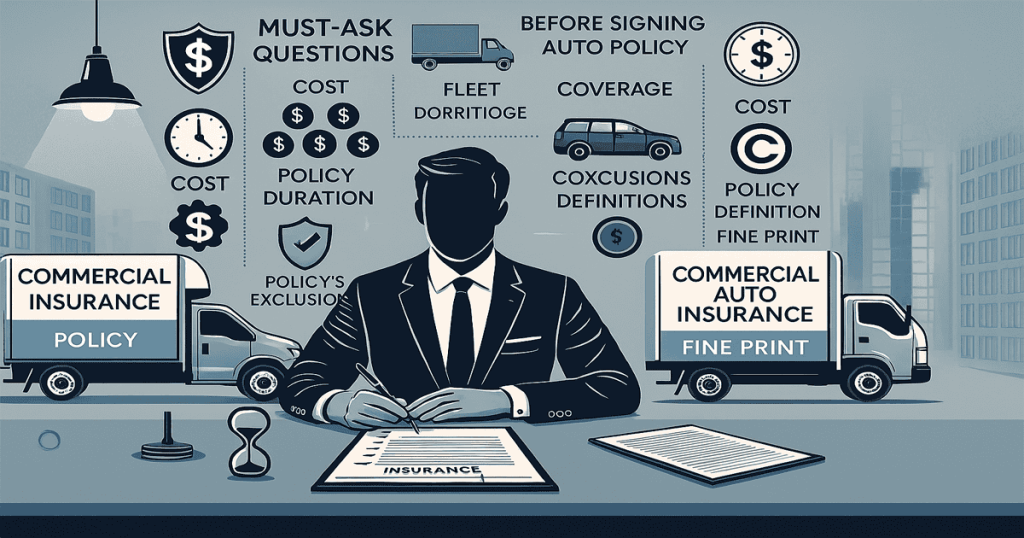
To avoid surprises later, ask your broker or insurer the following:
- What’s excluded from this policy?
- Does it cover employees driving their own vehicles for work?
- Are tools and equipment in the vehicle insured too?
- Are trailers and attachments covered?
- How does this policy apply to leased or rented vehicles?
Clear answers ensure your policy fits your specific operations.
Online vs. Local Brokers: What’s Best for Contractors?
- Online Platforms:
- Pros: Quick quotes, transparent pricing, good for standard policies.
- Cons: May lack customization or human support during claims.
- Local Insurance Brokers:
- Pros: Deep industry knowledge, one-on-one service, policy tailoring.
- Cons: Slower quoting process and may come with higher service fees.
For specialized coverage, especially across multiple vehicles or employee drivers, local brokers often deliver better value.
Why A+ Rated Carriers Offer Better Long-Term Value
Financial strength matters when it comes to claims:
- Quick Payouts: Highly rated insurers have the reserves to pay claims without delays.
- Reliable Service: Better customer support during disputes or major losses.
- Stable Pricing: A+ carriers are less likely to suddenly spike premiums or exit the market.
Look for ratings from AM Best or Standard & Poor’s when choosing a provider.
How to File a Commercial Auto Claim the Right Way
Filing a claim correctly improves your chances of fast resolution:
- Step 1: Gather evidence—photos, videos, witness statements.
- Step 2: File a police report immediately, even for minor incidents.
- Step 3: Notify your insurance provider within 24 hours.
- Step 4: Keep a file of all documentation including repair estimates and communications.
- Step 5: Stay in touch with your adjuster and respond promptly to information requests.
A smooth claim process protects your reputation and reduces downtime.
Renewal Tips to Keep Premiums Low Year After Year
Contractors can keep costs down with proactive renewal strategies:
- Review Policy Annually: Update vehicle lists and usage data.
- Highlight Good Driving Records: Insurers reward clean safety histories.
- Request Discounts: Ask about loyalty rewards, bundling, and usage-based plans.
- Eliminate Lapsed Coverage: Gaps in insurance can spike future premiums.
Treat renewal time as a negotiation, not a formality.
Staying Compliant With DOT and State Requirements
Compliance isn’t optional—it’s enforceable and essential:
- DOT Numbers: Required if you’re transporting goods or people across state lines.
- State Mandates: Minimum coverage levels vary; failing to comply can lead to license suspension.
- Proof of Insurance: Always have up-to-date COIs (Certificates of Insurance) available for clients and inspectors.
Staying compliant helps maintain your license, contracts, and professional reputation.
Frequently Asked Questions (FAQs)
What vehicles qualify for contractors commercial auto insurance?
Any vehicle used primarily for business tasks—vans, pickups, box trucks, dump trucks, and trailers—should be covered under a commercial auto policy. This includes owned, leased, and employee-operated vehicles.
Is commercial auto insurance required for contractors?
Yes. If you’re using a vehicle for business, especially in regulated trades or with employee drivers, most states require commercial auto insurance by law.
What does commercial auto insurance for contractors cover?
It covers third-party injury or property damage (liability), your vehicle damage (collision/comprehensive), and often includes medical payments, uninsured motorist, and optional hired/non-owned coverage.
How much does contractor commercial auto insurance cost?
It ranges from $1,200 to $2,500+ annually per vehicle depending on coverage levels, fleet size, business location, vehicle type, and driving history.
Can personal auto insurance cover work vehicles?
No. Most personal auto policies exclude business use, and relying on them may result in denied claims if you’re involved in an accident while working.
Can I bundle my commercial auto with other contractor policies?
Yes. Bundling with general liability, inland marine, workers’ comp, or umbrella policies often leads to discounts and simpler policy management.
Final Thought: Commercial auto insurance for contractors isn’t just about compliance—it’s about protecting the business you’ve worked hard to build. The right policy provides a financial cushion, boosts client confidence, and keeps your crew rolling through every job, storm, and season.