

Freelancers are the new age entrepreneurs. From writers and developers to consultants and designers, millions of independent professionals are redefining what it means to run a solo business. However, freelancing doesn’t mean freedom from risk. That’s where smart business insurance comes in.
Business insurance for freelancers is a safety net that protects against liability, errors, property damage, and even cyber threats. It shows professionalism, builds client trust, and safeguards your income. This article delivers everything you need to know to make informed insurance decisions—backed by expert insights and real-world examples.
Why Smart Business Insurance Empowers Freelancers
Freelancers operate without the traditional corporate safety nets—no HR, no legal department, no fallback. Business insurance fills that gap. Here’s how:
- It shields against lawsuits and claims: Whether a client accuses you of negligence or someone gets injured during a meeting at your home office, insurance covers your defense and potential settlements.
- It builds credibility with clients: Many larger businesses require proof of insurance. It signals that you’re a professional worth hiring.
- It protects your assets: From your laptop to your intellectual property, policies help you recover from damage or loss.
- It supports long-term success: Insurance allows you to focus on growth, knowing you have a financial cushion against unexpected events.
Essential Insurance Benefits Every Freelancer Deserves
When you invest in the right insurance, you’re not just paying premiums—you’re buying peace of mind. Here’s what you gain:
- Financial Security: Avoid out-of-pocket costs for legal battles, equipment damage, or contract disputes.
- Professional Legitimacy: Clients view insured freelancers as more trustworthy and responsible.
- Risk Management: You’re prepared for the unexpected—whether it’s a lawsuit, a fire, or a stolen laptop.
- Business Continuity: With income protection and coverage for lost time or data, your business can bounce back faster.
How Professional Insurance Enhances Freelance Growth
Insurance isn’t just a protective measure—it’s a strategic tool for scaling your freelance business. Here’s how:
- Boosts Client Confidence: Professional liability insurance (E&O) shows clients you’re serious and accountable for your work.
- Fulfills Contractual Obligations: More platforms and clients now require freelancers to carry specific policies.
- Allows for Bigger Projects: With insurance, you can take on higher-value clients and jobs with less risk.
- Supports Team Expansion: Want to subcontract? Workers’ comp and liability policies ensure you stay compliant and protected.
Key Insurance Types: Liability, E&O, and Equipment
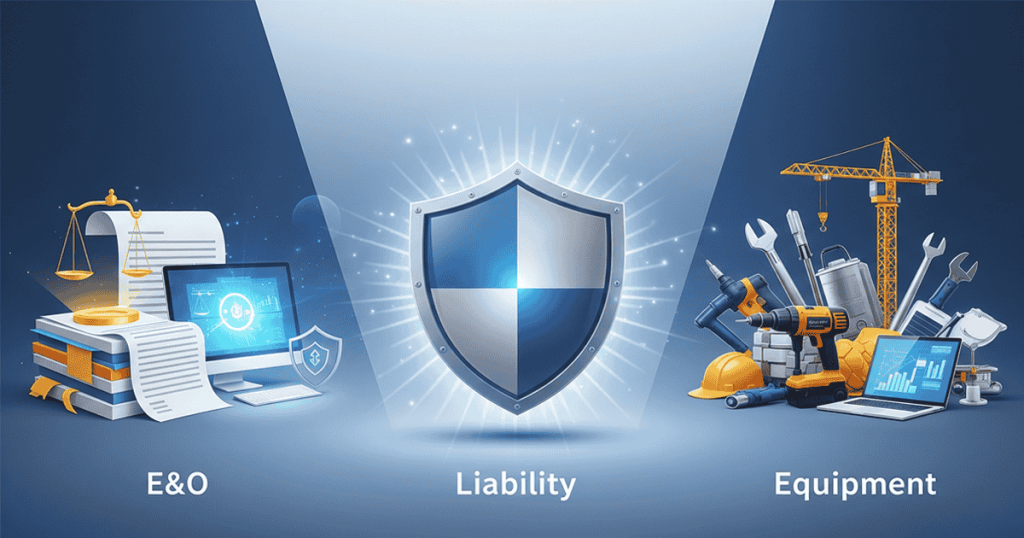
Understanding the core insurance policies helps freelancers cover their bases:
General Liability Insurance is essential for protecting against third-party bodily injury and property damage. For example, if a client trips in your studio or you damage a client’s equipment on-site, this policy has you covered.
Professional Liability Insurance (E&O) handles claims related to errors, missed deadlines, or faulty advice. A consultant who gives the wrong strategy or a developer whose code breaks a site can rely on E&O to handle client claims.
Business Property Insurance safeguards tools like laptops, cameras, and phones—especially if you work from home. It also protects against theft, fire, or natural disasters.
These policies can often be bundled into a Business Owner’s Policy (BOP) for better coverage at a lower cost.
Differences Between General Liability & Professional Coverage
While they sound similar, these two types of coverage protect against very different risks.
- General Liability covers physical incidents like slip-and-fall accidents or property damage.
- Professional Liability protects against claims that your service caused financial harm due to negligence or errors.
Example:
- You’re a videographer, and a client falls during an equipment setup. General liability applies.
- You’re a marketing consultant, and your campaign advice causes revenue loss. Professional liability steps in.
In many cases, carrying both types of coverage is the smart move.
Why Property and Cyber Insurance Matter for Freelancers
Your tools and data are central to your freelance success. Two additional policies help protect them:
- Property Insurance: Covers physical assets, from your editing equipment to your work desk. Even if you work from home, your homeowner’s policy may not protect business tools.
- Cyber Insurance: Essential for anyone handling sensitive information, it covers hacking, phishing, ransomware, and more.
With remote work rising, these policies are more critical than ever.
How to Pick Affordable, Full-Feature Freelancer Coverage
Getting insured doesn’t mean you have to overspend. Follow these steps:
- Evaluate Your Needs: List your services, assets, and exposure risks.
- Start with Core Policies: Focus on general liability, professional liability, and equipment coverage.
- Compare Quotes: Use platforms like Next Insurance, Thimble, Hiscox, and Simply Business.
- Ask About Bundling: Combining policies often lowers your monthly costs.
- Read the Fine Print: Look for exclusions that could limit your protection.
Many insurers now offer freelancer-friendly packages with flexible payment terms.
Evaluating Policy Limits, Exclusions, and Premiums
Before committing to any policy, understand these key elements:
- Policy Limits: The maximum amount your insurer will pay per claim or year. Higher limits mean better protection but also higher premiums.
- Deductibles: The amount you pay before coverage kicks in. Higher deductibles usually mean lower premiums.
- Exclusions: Certain events or activities that aren’t covered. Always read these carefully.
- Premiums: Your monthly or annual insurance cost. Ask about discounts for upfront payments or bundling.
Balancing coverage and cost is key to sustainable protection.
Tips for Comparing Insurers and Coverage Options
All insurance providers are not equal. When comparing, look for:
- Reputation: Check customer reviews and Better Business Bureau (BBB) ratings.
- Specialization: Some insurers focus on freelancers or creative professionals.
- Customer Service: Access to fast claims processing and real support matters.
- Customization: Choose providers that let you adjust limits, add endorsements, or change policies as you grow.
A 15-minute call with an agent can save you thousands down the line.
Freelancer Claim Examples: Learning From Real Cases
Real stories show how insurance plays out in practice:
1. Designer Dispute – A freelance designer submitted a logo revision late. The client sued for breach of contract. E&O insurance covered the legal costs and settlement.
2. Studio Slip – A client visiting a freelance illustrator’s home slipped on spilled water. General liability insurance covered medical costs.
3. Equipment Theft – A freelance photographer’s gear was stolen during travel. Business property insurance reimbursed them quickly.
These scenarios highlight how insurance turns emergencies into manageable events.
Protecting Your Income After a Liability or Cyber Incident
One major benefit of freelancer insurance is business continuity. If your system is hacked or you face a lawsuit, insurance helps you:
- Cover Legal Fees: Defense costs can be tens of thousands without coverage.
- Replace Income: Some policies offer business interruption support.
- Maintain Reputation: Handling claims professionally builds client trust.
- Avoid Out-of-Pocket Burdens: Insurers negotiate settlements and cover costs.
Your freelance income deserves protection like any other business revenue.
When to Bundle Home, Auto, and Business Insurance
Bundling isn’t just about convenience—it can be financially smart:
- Home + Business: Protect your workspace and tools together.
- Auto + Business: If you use your car for client work or travel, personal coverage may not be enough.
- Multi-Policy Discounts: Insurers often reduce rates when you hold multiple policies.
Discuss your setup with a broker to find optimal combinations.
Ways Freelancers Can Lower Insurance Premiums Wisely
Saving money without cutting corners is possible:
- Increase Deductibles: You’ll pay less monthly but more if a claim happens.
- Pay Annually: Annual payments often come with a 5–10% discount.
- Maintain a Clean Record: Avoiding claims keeps you in the low-risk category.
- Use Freelancer Platforms: Some freelance marketplaces offer group insurance rates.
- Reassess Annually: Your needs and risks change—review your policy each year.
An informed freelancer is a protected freelancer.
Maximizing Tax Deductions With Business Insurance
Good news: most business insurance premiums are tax-deductible. Here’s how to benefit:
- Track All Premiums: Keep clear records of payments.
- Deduct Properly: Use IRS Schedule C to list deductions.
- Separate Business and Personal: Only deduct coverage tied to your freelance work.
- Hire a CPA: An accountant ensures you don’t miss out on eligible deductions.
Insurance protects your business—and your bottom line.
Renewal Tips: Keeping Coverage Optimal At Renewal Time
Renewal is your chance to reassess and refine:
- Review Claims History: A clean record may earn you discounts.
- Update Coverage Levels: Got more clients or equipment? Adjust limits.
- Add Endorsements: Need media liability or event coverage? Add them during renewal.
- Compare Again: Rates shift—always shop around before renewing.
Never let policies auto-renew without a full review.
FAQs About Business Insurance for Freelancers
1. What does general liability insurance cover for freelancers?
It covers third-party bodily injury or property damage due to your business operations. Think slip-and-falls or client property damage.
2. Do freelance writers or designers need professional (E&O) insurance?
Yes. If your work causes a client financial loss, E&O helps cover legal costs and damages.
3. How much insurance coverage should a freelancer carry?
Typically $1 million per occurrence and $2 million aggregate. Consider higher limits if working with large clients.
4. Can a home-based freelancer use personal insurance coverage?
Generally no. Homeowners policies often exclude business equipment and client-related incidents.
5. Is cyber insurance necessary for independent contractors?
If you collect or manage client data, absolutely. Cyber threats are common and expensive.
6. How do I lower my insurance costs without risking protection?
Bundle policies, raise deductibles, avoid unnecessary add-ons, and reassess annually.
7. How do I file a claim as a freelancer?
Contact your insurer immediately, document the incident, follow their claim process, and cooperate with adjusters.
Freelancing is a business—and every business deserves protection. With the right insurance, you’re not just reducing risk, you’re building a secure, trustworthy, and scalable brand.