
Whether you run a residential maid service, commercial janitorial company, or specialized post-construction cleanup business, protecting your operation with the right insurance is critical. Cleaning businesses face a unique mix of risks — from slip-and-fall accidents to property damage and employee injuries. Without proper coverage, a single claim could lead to financial ruin.
This guide provides a complete breakdown of what you need to know about business insurance for cleaning services. From essential coverages and liability issues to cost estimations and money-saving tips, we’ll walk you through everything step-by-step. If you’re a cleaning professional looking to safeguard your business, win more contracts, and meet legal or client requirements, this article is for you.
Why Cleaning Services Must Have Business Insurance
Business insurance isn’t just a legal formality — it’s a practical safeguard that protects your clients, employees, and your reputation. Here’s why:
- Accidents Are Unpredictable
A mop left unattended or cleaning chemical spill can lead to client injuries or property damage, even if you run a tight operation. - Clients Often Require It
Many residential and commercial clients won’t hire uninsured cleaning companies. Proof of insurance makes you more credible and competitive. - Legal Protection
Insurance covers lawsuits, court fees, and settlement payouts resulting from negligence, damages, or employee actions. - Covers Your Team
If a worker is injured on the job, workers’ compensation will cover their medical expenses and lost wages, protecting you from lawsuits. - Secures Bigger Contracts
Government, corporate, and real estate contracts often require businesses to carry specific policies such as bonding and liability insurance. - Reduces Out-of-Pocket Losses
Without coverage, replacing stolen equipment or paying for damage can wipe out your profits.
What Makes Insurance Vital for Cleaning Companies
Insurance is vital because it shields your business from the unexpected. Cleaning companies regularly operate in clients’ homes, offices, and commercial properties, which means you’re exposed to risks on someone else’s turf. A spilled solution, broken item, or injured employee could result in a lawsuit or a major expense.
Even if you’re a solo cleaner, just one mistake could cost you thousands. Having the right policies in place not only prevents financial collapse but also shows professionalism and maturity to clients. It sends a clear message: you take your work — and their property — seriously.
Insurance also supports business continuity. If your cleaning van is stolen or your equipment is damaged in a fire, your insurance can help replace it quickly, so you don’t lose clients or revenue.
How Insurance Builds Trust and Long-Term Security
Trust is everything in the cleaning industry. Clients invite you into private spaces, often when they’re not home or after hours. When they know you’re insured and bonded, they feel more comfortable giving you access.
Insurance builds trust in several ways:
- Proves Professionalism: Insured businesses show they’re serious and responsible.
- Encourages Repeat Clients: People are more likely to rehire companies that offer documented protection.
- Boosts Online Reputation: Clients will often mention professionalism and trustworthiness in reviews when they know you’re insured.
Long-term, insurance also helps your business grow by reducing risks. You can hire more staff, take on larger jobs, and expand into new service areas with confidence.
Top Liabilities Faced by Cleaning Businesses Today
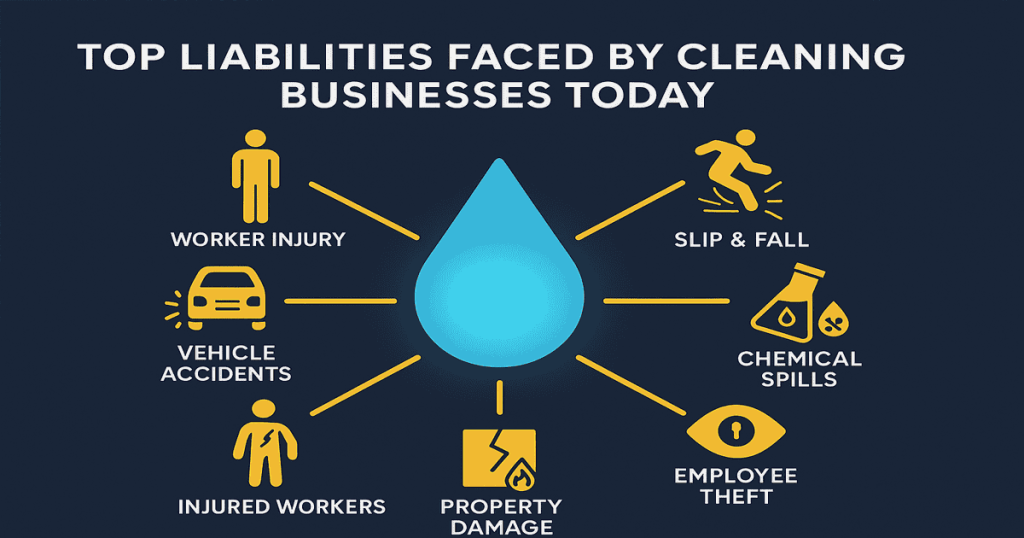
Here are the most common liability exposures in the cleaning industry:
- Slip-and-Fall Accidents: A wet floor or misplaced cord can lead to lawsuits.
- Property Damage: Dropping a client’s antique vase or scratching hardwood floors.
- Chemical Spills: Using the wrong product can discolor or ruin surfaces.
- Employee Theft: Some clients may accuse workers of stealing valuables.
- Vehicle Accidents: If you or your team drives to client sites, vehicle-related liability is high.
- Injured Workers: Back injuries, cuts, or chemical exposure are common.
Having the proper insurance helps you handle these scenarios without dipping into your savings or shutting down your operation.
How Insurance Helps Avoid Financial and Legal Trouble
Insurance isn’t just a safety cushion—it can be the difference between staying in business and going bankrupt. If a client sues you for damage or injury, your liability policy covers legal fees, settlements, and judgments. If you didn’t have insurance, you could be forced to pay out-of-pocket or close shop.
It also saves you from being underinsured. For instance, if your van is totaled and you lack commercial auto coverage, you’d need to pay for repairs or a new vehicle from your pocket. Similarly, skipping bonding can cost you lucrative contracts.
In short, insurance gives you peace of mind, so you can focus on delivering excellent service instead of worrying about “what ifs.”
Real Examples of Insurance Saving Cleaning Companies
- Accidental Damage: A cleaner spilled bleach on a client’s expensive carpet. The company’s liability insurance covered $3,200 in damage.
- Injury at Job Site: An employee slipped on wet stairs and broke their wrist. Workers’ comp paid medical bills and wages for 3 months.
- Auto Collision: A company van hit a parked car during a route. Commercial auto insurance covered the $7,000 repair bill.
- Theft Allegation: A client accused a worker of stealing a watch. Bonding helped settle the claim and restore the business’s reputation.
- Equipment Loss: A fire damaged all cleaning tools in storage. Property insurance replaced $5,800 worth of equipment.
Essential Coverages for a Professional Cleaning Service
To build a secure foundation, most cleaning companies should have:
- General Liability Insurance: Covers third-party injuries and property damage.
- Commercial Auto Insurance: For vehicles used to transport supplies and staff.
- Workers’ Compensation: Covers employee injuries (required by law in most states).
- Janitorial Bond (Surety Bond): Protects clients from theft or dishonest actions by your employees.
- Business Personal Property Insurance: Covers damage or loss of your tools and equipment.
These policies work together to offer complete protection for your operation.
What General Liability and Bonding Actually Cover
- General Liability Covers:
- Accidental property damage at a client’s site
- Slip-and-fall injuries
- Legal defense and settlements
- Bonding Covers:
- Theft or dishonest acts by employees
- Reimbursement to clients for lost or stolen items
- Required for many commercial contracts
Think of liability insurance as protecting your business from accidents, and bonding as protecting your client from unethical behavior.
Optional Insurance Add-ons That Offer Extra Protection
You can enhance your policy with specialized coverages:
- Inland Marine Insurance: Covers tools and equipment in transit
- Cyber Liability Insurance: Protects sensitive client information stored digitally
- Umbrella Insurance: Adds extra liability limits if a claim exceeds your standard policy
- Employment Practices Liability Insurance (EPLI): Covers wrongful termination, discrimination, or harassment claims
These add-ons are especially useful for growing companies, high-risk jobs, or large-scale commercial accounts.
Average Insurance Costs for Small and Large Cleaners
Your business size directly affects your insurance premium:
- Solo House Cleaner: $350–$800 annually
- Small Residential Cleaning Business (2–5 staff): $800–$2,500 annually
- Mid-Sized Janitorial Company (6–15 staff): $2,500–$6,000 annually
- Large Commercial Cleaning Operation: $6,000+ annually
Bundling policies or opting for higher deductibles can help reduce costs.
What Affects Your Cleaning Business Insurance Premiums
- Business Size & Revenue: Bigger teams and higher income = more exposure.
- Location: Higher premiums in metro areas or high-risk neighborhoods.
- Types of Services Offered: Using hazardous chemicals or cleaning high-risk areas increases risk.
- Claims History: Fewer past claims = lower rates.
- Vehicles & Equipment: Expensive gear or multiple vehicles will raise your premium.
- Policy Limits & Deductibles: Higher coverage costs more but offers greater protection.
How Location, Staff, and Job Type Shape Your Quote
- Urban vs. Rural: Urban businesses face higher theft and legal risks, impacting premiums.
- Number of Employees: More workers increase your liability and workers’ comp premiums.
- Specialized Services: Carpet cleaning, hazardous material cleanup, or post-construction cleaning add unique liabilities.
Each of these factors helps insurers calculate your quote. The more precise and transparent you are, the more accurate and fair your pricing will be.
Ways to Lower Insurance Costs Without Cutting Coverage
- Improve Safety Protocols: Fewer accidents mean fewer claims and lower future premiums.
- Bundle Multiple Policies: Insurers offer multi-policy discounts.
- Maintain a Clean Claims Record: Avoid small claims when possible.
- Choose Higher Deductibles: Lowers your monthly cost (just be prepared to pay more out-of-pocket for small incidents).
- Regular Policy Reviews: Update your plan annually to eliminate unnecessary coverages.
These small steps can lead to significant savings over time.
How to Bundle Policies with a BOP for Bigger Savings
A Business Owner’s Policy (BOP) combines several core policies at a lower rate. Typically includes:
- General Liability
- Commercial Property Insurance
- Business Interruption Coverage
Why BOPs are great:
- Simplifies billing and management
- Reduces overall cost vs. separate policies
- Customizable with optional add-ons (like cyber or inland marine)
A BOP is ideal for cleaning businesses with physical office space, staff, or valuable equipment.
Choosing the Right Insurer for Your Cleaning Company
Not all insurers understand the cleaning industry. Here’s what to look for:
- Industry Experience: Choose carriers that specialize in small businesses or cleaning professionals.
- Flexible Policy Options: Ability to customize your coverage as you grow.
- Strong Claim Support: Read reviews on how fast and fair claims are handled.
- Competitive Pricing: Balance cost with the coverage provided.
- Availability of Bonds: Ensure they offer janitorial bonds if needed for contracts.
Top insurers often include Next, Thimble, Hiscox, Insurance Canopy, and Insureon.
FAQ
Do all cleaning companies in the U.S. need business insurance?
Yes. Whether you’re an independent cleaner or run a commercial janitorial service, having business insurance is critical. Most clients, landlords, and even state regulations require proof of liability insurance and sometimes bonding to operate legally and professionally.
What type of insurance do house cleaners and janitors need?
The most important coverages include:
General Liability Insurance
Workers’ Compensation (if you have employees)
Commercial Auto (if vehicles are used for work)
Janitorial Bond (for theft protection)
Inland Marine (for tool protection on the go)
Optional: Umbrella and cyber liability for growing operations.
How much does business insurance for cleaning services cost?
Premiums range from $350 to $6,000+ per year. It depends on your business size, services offered, number of employees, claims history, and your location. Bundling policies and implementing safety measures can help reduce these costs.
Final Thoughts
Cleaning is a trust-based business, and your clients expect professionalism, safety, and accountability. With the right insurance policies in place, you can meet those expectations while protecting your income, staff, and reputation. Use this guide to evaluate your current coverage or get started building a policy that suits your cleaning business. Peace of mind is just a policy away.